
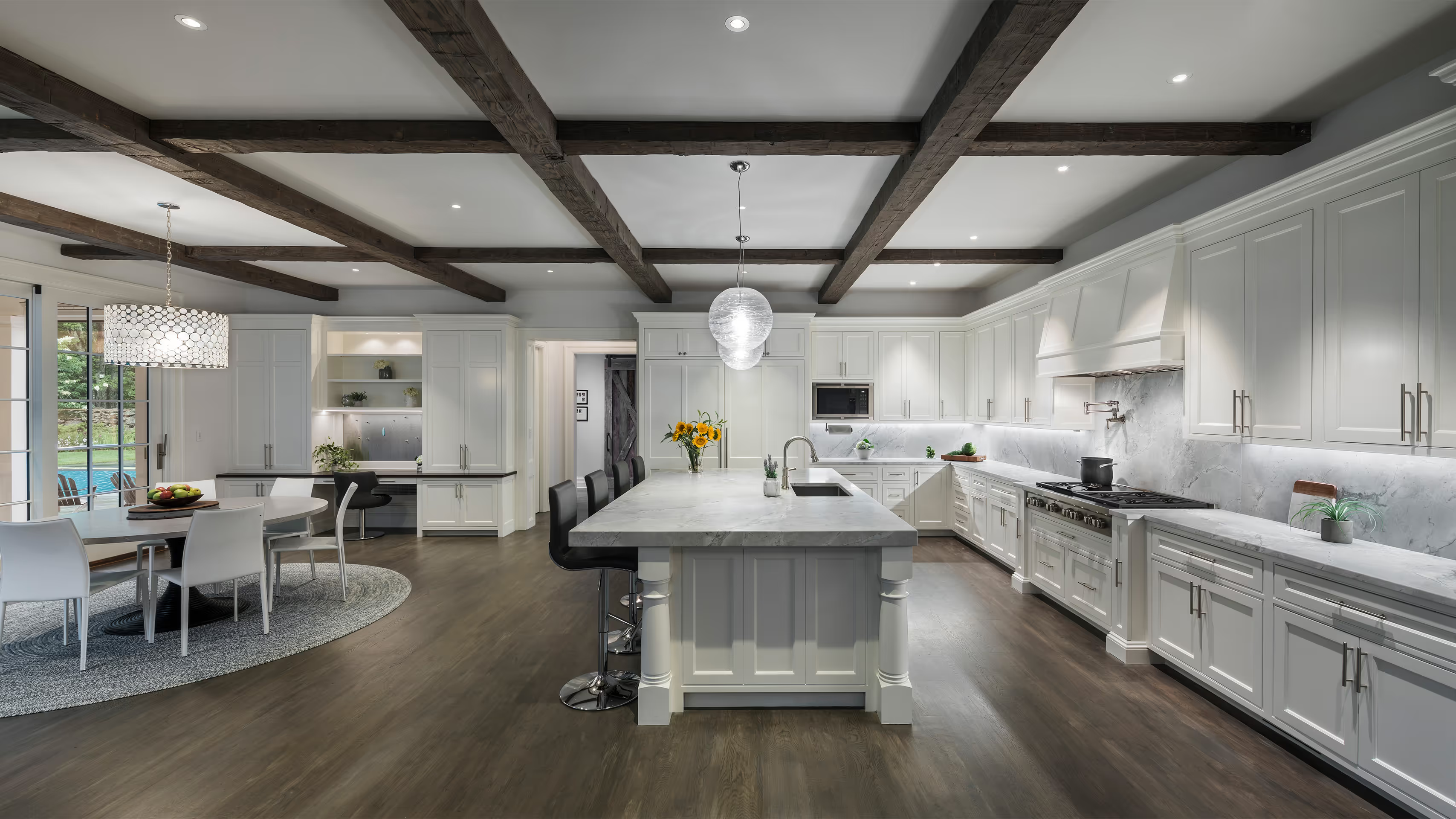
A well-designed home shapes how people gather, move, and live together. In residential architecture, the most important decisions are not only about style or square footage, but about how a home supports connection. The homes that work best for gathering are rarely the ones that are simply biggest. They are the ones planned with strong sightlines, natural flow, and practical spaces that make everyday life and entertaining easier.
At Cardello Architects, this balance between beauty and livability remains central to the design process. The most successful homes are the ones that feel timeless, functional, and deeply attuned to the people who gather inside them. Just as importantly, they offer clear practical advantages. They reduce bottlenecks, improve visibility, support hosting, and create spaces that are easier to use well over time.
Arrival, Flow, and Visual Connectivity
The experience of gathering begins at the point of arrival. A gracious porch, well-scaled foyer, or thoughtfully planned mudroom immediately affects how welcoming and composed a home feels.
These transitional areas also serve an important practical purpose. They help manage coats, bags, shoes, and the many items that accompany family life and entertaining. In regions where seasonal living shapes daily routines, these spaces are especially valuable because they protect the calm of the home’s interior while supporting how people actually enter and move through it.
Once inside, the strongest homes guide movement intuitively. Guests should be able to move easily between the kitchen, dining area, great room, outdoor spaces, and powder room without confusion or bottlenecks. Hosts should be able to prepare, serve, and reset without constantly crossing through every conversation. Good circulation makes a house feel composed even when it is full.
The great room supports that same sense of connection through visibility. Someone can be cooking, another person can be setting the table, and others can be gathered near the fireplace, all while remaining aware of one another. That openness works best when it is balanced with architectural definition. Ceiling details, millwork, lighting, and material transitions can shape seating areas, dining spaces, and circulation zones without relying on walls.
A few of the most important design moves here are straightforward: create a real drop zone near the entrance, keep a clear path between the kitchen and main gathering spaces, and avoid layouts where guests must cross work zones just to move through the house. In homes designed for gathering, circulation should feel almost invisible because it works so naturally.
Designing a Welcoming Entry Sequence for the Perfect Home
A home that gathers people well should feel inviting from the moment someone arrives. Covered entries, thoughtful foyers, and practical transitional zones create a stronger first impression while also helping the house manage everyday life. In a luxury residence, these spaces should feel both polished and useful.
Creating Natural Traffic Flow Through Living Areas
Good circulation helps your home function during both casual family routines and larger events. The connection between primary gathering spaces should feel intuitive, with clear movement between the kitchen, dining room, great room, outdoor areas, and service zones. This reduces bottlenecks and allows the home to remain comfortable under pressure.
The Importance of Sightlines for Family Gatherings
Strong sightlines allow different parts of the home to remain visually connected. This matters during entertaining, but it also improves daily life by allowing cooking, dining, and relaxing to happen with a greater sense of awareness and togetherness.
The Kitchen as the Social and Functional Anchor
In many homes, the kitchen functions as the true center of gathering. It is often the first place people gravitate toward and the last place they leave. Because of that, the kitchen must perform as both a highly functional work area and an inviting social space.
Layout has a major influence on whether this balance is successful. In larger homes, a double-island configuration can be particularly effective because it separates preparation from interaction. One island may support cooking, storage, and workflow, while the other supports seating, serving, and conversation. This helps the kitchen remain active and social without disrupting the practical demands of meal preparation.
The kitchen also plays a strong visual role within the broader architecture of the home. In open kitchen layouts especially, its cabinetry, stone surfaces, lighting, and detailing are always in view. A well-designed kitchen should feel fully integrated with the surrounding rooms so that it reads as part of the home’s architectural composition rather than as a purely utilitarian room.
Just as important are the support spaces that allow the kitchen and gathering areas to function smoothly. A scullery or hidden kitchen can provide a separate zone for preparation, cleanup, catering support, and appliance-heavy tasks, allowing the main kitchen to remain orderly and guest-ready. Walk-in pantries, serving storage, beverage stations, coat closets, and built-in cabinetry serve a similar purpose. They reduce clutter and improve how the home performs during both special occasions and everyday use.
The most useful guidance is simple: separate prep from social space whenever possible, keep storage close to where items are used, and avoid forcing the main island to serve as prep zone, buffet, seating area, and cleanup station all at once. The kitchens that work best for gatherings are the ones that support both visibility and order.
Integrating the Kitchen Into the Home’s Architecture
Because the kitchen is often visible from the surrounding rooms, it should feel consistent with the home’s broader architectural language. Materials, cabinetry, hardware, and lighting should work together to make the kitchen feel intentional rather than detached from the rest of the design.
The Value of a Scullery or Hidden Kitchen
Support spaces allow the visible entertaining space of the home to remain composed even during busy moments. A scullery or hidden kitchen can handle preparation, cleanup, and appliance storage while the main kitchen continues to function as a social space.
Storage That Supports Entertaining
Thoughtful storage improves how a home performs. Serving pieces, linens, seasonal items, beverages, coats, and outdoor accessories all need a place. When that storage is built into the architecture, the home feels more orderly and easier to manage.
Everyday Family Use: Designing for Connection Beyond Entertaining
A home should not work only during celebrations. Its real success is often measured by how well it supports ordinary days. That means creating spaces that accommodate routines, encourage interaction, and allow family members to feel connected without forcing them into a single activity.
This may include a kitchen island where homework and conversation happen alongside meal preparation, a breakfast area that supports a slower morning rhythm, or a living space where reading, talking, and relaxing can all happen comfortably at once. These moments may appear simple, but they are often what give your home its sense of warmth and ease.
This kind of informal togetherness is one of the clearest signs of thoughtful residential architecture. It allows a family to share space naturally, which can be just as important as the home’s ability to support hosting.
Moving Beyond Formal Floor Plans
Older floor plans often separated entertaining, dining, and family life into distinct rooms with limited overlap. While that approach created formality, it did not always support the way families live today. More contemporary residential design favors a stronger relationship between shared spaces, allowing movement and interaction to happen more naturally while still preserving order and elegance. The best house plans reflect that shift by organizing shared rooms around comfort and connection.
Thresholds of Interaction: Blurring the Lines Between Indoor and Outdoor
In homes designed for gathering, indoor and outdoor living should feel closely connected. Terraces, covered porches, and landscaped areas are not simply amenities. When designed well, they become active extensions of the home’s social spaces.
Large openings, well-proportioned transitions, and consistency in materials can help the exterior feel related to the interior architecture. This allows gatherings to move outward naturally during warmer months and makes the home feel more expansive overall. In cooler seasons, covered outdoor spaces with heating and thoughtful lighting can still remain usable and inviting.
These areas should be planned with the same architectural rigor as interior rooms. Proportion, comfort, furniture layout, acoustics, and protection from the elements all influence whether an outdoor area feels essential or incidental. When integrated thoughtfully, outdoor living broadens the way a home can support gathering throughout the year. That might include a terrace for dining, a sheltered lounge for outdoor entertaining, or a garden area that creates a quieter setting just beyond the main entertaining spaces.
Here, a few choices make the biggest difference: place outdoor dining and lounging close to the kitchen, plan for shade and seasonal comfort from the start, and avoid treating the terrace as leftover square footage. Outdoor rooms work best when they are designed with the same clarity and purpose as the interior.
Extending the Gathering Outdoors for Outdoor Entertaining
Outdoor spaces are most successful when they feel like a continuation of the home rather than an afterthought. Terraces, covered dining areas, and sheltered sitting spaces can all support gathering when they are connected naturally to the rooms inside.
Designing Outdoor Spaces With Intention
Outdoor living requires the same level of planning as interior architecture. Comfort, scale, furnishings, lighting, and weather protection all determine whether these spaces feel usable and refined across multiple seasons.
Designing for Longevity: The Multi-Generational Legacy
Over time, children grow older, parents age, guests stay longer, and family structure evolves. A residence that accounts for these changes has greater long-term value and greater emotional durability.
Flexibility is a key part of that longevity. Guest suites, adaptable secondary rooms, and additional lounge areas can support adult children returning home, aging parents visiting for extended periods, or grandchildren gathering in the years ahead. These rooms help the home remain useful across different stages of life without needing to be fundamentally reworked. In a well-planned custom home, that flexibility is part of the design from the beginning.
Universal design principles also contribute to this long view when they are integrated thoughtfully. Wider passages, more generous clearances, and easier movement between spaces improve accessibility while maintaining a refined aesthetic. In a well-designed luxury home, these features should feel natural to the architecture rather than separate from it.
The most valuable long-term advice is to plan for change early. Include at least one flexible guest space, make circulation easier in the primary gathering areas, and avoid rooms that are so specialized they cannot adapt as family needs evolve. The strongest homes remain useful because they were designed with change in mind.
Universal Design With Refined Aesthetics: Cardello Architects
Accessibility should feel integrated into the design of your home. Wider passages, smoother circulation, and more thoughtful movement between rooms improve comfort while preserving the elegance of the architecture.
At Cardello Architects, that balance remains at the heart of residential design. The goal is to create homes that feel enduring, livable, and meaningful for the families who gather in them. Contact us to discuss a home designed around the way your family lives, gathers, and grows today.