
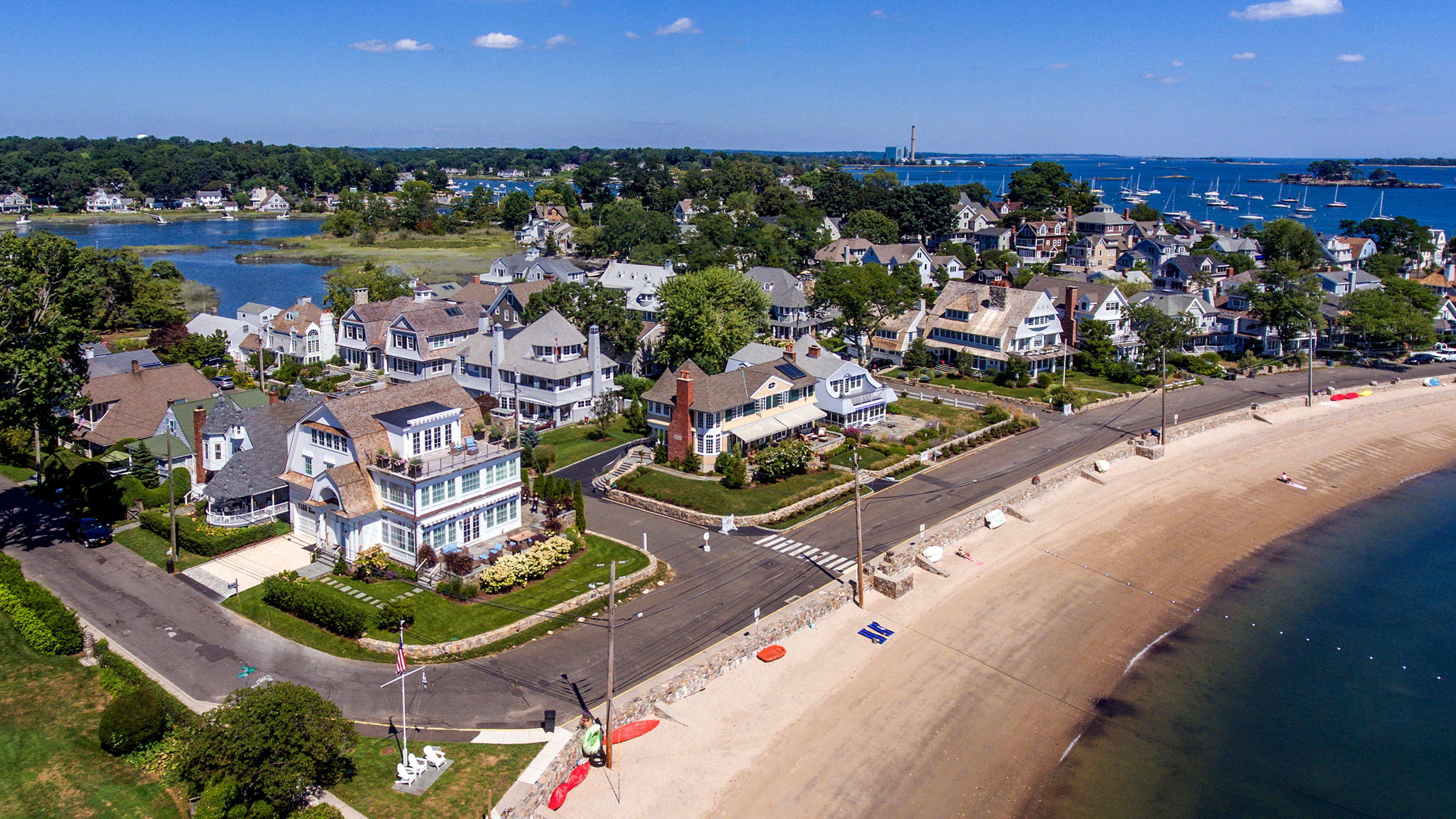
Introduction
Waterfront living in Fairfield County offers unmatched beauty and lifestyle but it also comes with strict regulations that homeowners cannot overlook. For properties in Greenwich, Westport, and nearby towns, FEMA regulations and Connecticut’s coastal building codes shape every new build, renovation, and major addition in 2025. While these rules may feel daunting, they protect your home, investment, and peace of mind.
Understanding the evolving landscape of flood maps, elevation requirements, building standards, and insurance implications is crucial for homeowners seeking to combine luxury with resilience. Cardello Architects helps navigate these complex requirements to create homes that are both compliant and exceptional.
FEMA & Flood Maps in 2026
FEMA flood maps are dynamic and updated periodically to reflect changing risks from storms, sea-level rise, and erosion. Recent revisions have shifted properties into higher-risk flood zones, triggering more stringent building requirements and affecting insurance rates on FEMA flood maps.
Key Updates for 2025:
- Base Flood Elevations (BFEs) are being revised along the Connecticut coast, often requiring higher structural elevations.
- New Special Flood Hazard Areas (SFHAs) may encompass previously lower-risk properties.
- Localized studies now provide more precise elevation data for coastal parcels.
Historical trends show that every FEMA map update has led to increased compliance requirements. “Homeowners are often shocked to learn their property sits in a higher flood zone after a new map update,” notes a coastal planner. Early engagement with these maps can prevent costly redesigns and permit delays.
Implications for Homeowners:
- Elevation requirements impact foundation type and structural design.
- Material selection and floor layout must comply with flood-resistant standards.
- Insurance premiums are directly influenced by flood zone designation and home compliance.
Connecticut Coastal Building Codes & ASCE 24-21
Connecticut’s 2022 State Building Code incorporates the latest ASCE 24-21 flood-resistant design standards. These codes set requirements to ensure coastal homes withstand flooding and wind while protecting property and inhabitants (ASCE 24-21 Standards).
Key Code Requirements:
- Elevation: Structures must sit above the Base Flood Elevation, often with added freeboard (typically 1–3 feet) for extra safety.
- Flood-resistant materials: Use of materials that withstand water intrusion below elevated floors.
- Breakaway walls: Nonstructural walls below flood level designed to collapse safely under water pressure.
- Utilities & equipment placement: Mechanical, electrical, and HVAC systems must be elevated above anticipated flood levels.
Architects emphasize that compliance is not just a formality. Meeting ASCE standards also positions homeowners for insurance discounts and long-term resilience.
Local Rules in Greenwich, Westport & Fairfield County
Beyond FEMA and state codes, local municipalities enforce additional oversight to preserve shoreline integrity and community aesthetics.
Permit & Review Requirements:
- Engineer-stamped plans for foundations, drainage, and seawalls.
- Town reviews of elevations, materials, and impact on neighboring properties.
- Environmental assessments in areas with sensitive wetlands or dunes.
Homeowners often face extra paperwork, but working with architects and engineers experienced in local boards ensures faster approvals and fewer setbacks. For example, Greenwich may require visual compatibility with the neighborhood, while Westport may emphasize coastal erosion mitigation and stormwater management in the Greenwich Planning Department.
Common Compliance Challenges:
- Navigating overlapping federal, state, and local rules.
- Adapting existing homes to new flood maps without compromising aesthetics.
- Ensuring drainage systems and seawalls meet both safety and design standards.
Insurance & Financial Implications
FEMA’s Risk Rating 2.0 has restructured flood insurance pricing to reflect actual risk, considering factors like elevation, building type, and local hazard data (FEMA Risk Rating 2.0). Many waterfront homeowners in Fairfield County are seeing higher premiums, but proactive design can reduce long-term costs.
Strategies for Premium Reduction:
- Elevating structures above the required Base Flood Elevation plus freeboard.
- Installing flood-resistant materials and breakaway walls.
- Maintaining proper grading and drainage around the property.
- Engaging certified floodplain managers for risk assessments.
Real-world examples show that homes exceeding minimum code requirements can save thousands annually in insurance costs. One local insurance advisor notes, “It’s not just about safety. A well-designed, compliant home can save thousands every year in insurance.”
Designing for Resilience Without Compromising Luxury
Modern Fairfield County coastal homes combine protection with style, creating residences that endure storms while offering elegance and comfort.
Design Strategies Include:
- Foundation Options: Piles, piers, or reinforced slabs to elevate structures while maintaining architectural appeal.
- Breakaway Walls: Protect lower levels without compromising aesthetics.
- Material Choices: High-performance windows, corrosion-resistant metals, composite decking, and moisture-resistant siding.
- Utilities Placement: HVAC, electrical panels, and mechanical systems elevated and accessible yet discreet.
- Storm Mitigation: Landscaping, seawalls, and flood-resistant terraces integrated with the home’s design.
Case Study: A Greenwich family replaced an older waterfront home with a Shingle Style residence elevated 3 feet above the new BFE, with reinforced pilings, flood-resistant cladding, and automated storm shutters. Despite the added compliance measures, the home maintains a timeless, luxurious aesthetic and qualifies for reduced insurance premiums.
Another Westport homeowner opted for a modern coastal design with extensive glazing, engineered steel frames, and breakaway lower-level walls. The design maximizes views while exceeding code requirements for elevation and flood resistance, demonstrating how luxury and resilience coexist.
Practical Steps for Homeowners in 2026
- Consult Local Planners Early: Identify flood zone designations and elevation requirements.
- Engage Experienced Architects: Ensure designs comply with FEMA, ASCE, and local codes.
- Coordinate with Engineers: Structural and civil engineers can optimize foundations, drainage, and utility placements.
- Budget for Compliance: Factor in costs for elevated foundations, breakaway walls, and insurance premiums.
- Integrate Resilience with Lifestyle: Design outdoor living, decks, and terraces that withstand flooding without sacrificing enjoyment.
FAQ
1. How often are FEMA flood maps updated?
Updates vary by region but typically occur every 5–10 years. Local communities may also conduct detailed studies more frequently.
2. What is freeboard, and why does it matter?
Freeboard is the extra height above the Base Flood Elevation added to structures for safety. Typically 1–3 feet, it significantly reduces flood risk and insurance costs.
3. Do local Greenwich or Westport permits add extra requirements?
Yes. Towns may require environmental assessments, engineer-stamped plans, and visual compatibility reviews.
4. How does Risk Rating 2.0 affect premiums?
Flood insurance rates are now based on actual risk factors, including elevation, building type, and local hazards. Homes built above code may benefit from lower premiums.
5. Can existing homes be retrofitted for compliance?
Yes. Options include elevating the structure, installing flood-resistant materials, and relocating utilities. Consultation with architects and engineers is critical.
6. What materials are best for waterfront resilience?
High-performance windows, corrosion-resistant metals, treated wood, fiber cement siding, and moisture-resistant insulation.
7. Are breakaway walls required?
For certain flood zones, yes. They protect the structure while allowing water to pass without damaging the main living areas.
Conclusion
In 2025, Fairfield County waterfront homeowners must navigate FEMA flood maps, Connecticut’s coastal building codes, and local regulations. While the process can be complex, experienced architects and engineers turn compliance into an opportunity to build safe, resilient, and luxurious homes.
Whether you are planning a new build or a renovation, understanding the intersection of elevation requirements, material standards, and insurance implications ensures your property is protected and investment-worthy. With careful planning, your waterfront home can combine beauty, comfort, and long-term resilience.
Ready to design your waterfront home with confidence? Schedule a consultation with Cardello Architects to ensure your dream project meets every code requirement while delivering the lifestyle you desire.