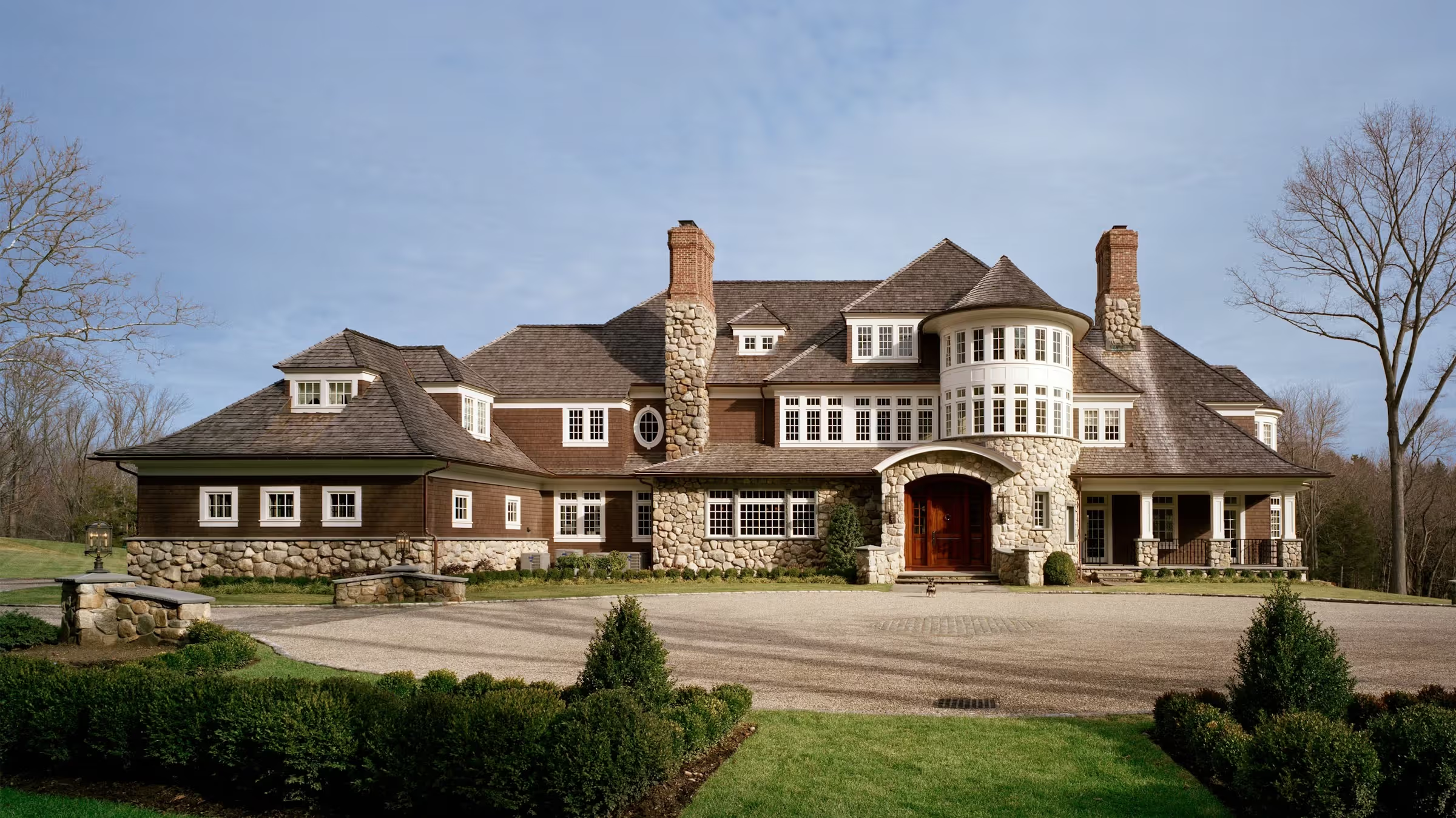
Choosing the right architect is one of the first and most important decisions in a luxury custom home project. The architect does far more than create drawings. They help shape the design vision, study the property, guide major decisions, coordinate the technical work, and often remain involved through construction.
If you are researching this for the first time, the main idea is simple. You are not only choosing a design style. You are choosing the person or firm that will help guide the full creation of a highly personal home, often over the course of several years.
Contact us to discuss your custom home today
Start With Your Own Project Before Designing Your Home
Before you compare firms, get clear on your own project. You do not need every answer, but you should understand your priorities.
- How much space do you need? Is privacy important?
- Do you want formal entertaining rooms or a more relaxed open layout?
- Do you want the architecture to feel quiet and restrained, or more expressive?
- Are there materials, settings, or architectural traditions you are drawn to?
In a luxury project, this step matters because the architect will be shaping more than a floor plan. They will be helping define the level of refinement, the relationship between the home and its site, and the quality of experience throughout the house.
It also helps to separate needs from preferences. A certain number of bedrooms may be a need. A limestone exterior, a paneled library, or a seamless indoor-outdoor entertaining sequence may be a preference.
Budget and timing matter early too. You do not need a final number, but you should have a realistic investment range and general timeline. High-end residential work often involves more customization, more coordination, and more detailed execution. The architect you choose should be equipped for that level of complexity.
What to Look for in Architects
Start with the architect portfolio, but do not stop at the photography. Look at the homes themselves. Do they feel proportionate and composed? Do they sit naturally on the land? Do they show restraint, clarity, and depth of thought? Do the interiors and exteriors feel connected? Does the work suggest a consistent level of design quality.
In luxury residential work, details matter. Look for homes that feel resolved, not simply dramatic. Strong architecture often shows itself in scale, material transitions, light, flow, and how the house responds to the property.
Then ask whether the architect has experience that matches your project. A firm may be talented, but not necessarily the best fit for a high-end custom home. Some firms are stronger in new estate homes, some in home additions, some in remodeling, some in waterfront properties, and some in traditional or historically informed architecture.
Licensing matters as well. A licensed architect brings professional training, legal responsibility, and technical oversight. In a luxury home, where home design, documentation, consultant coordination, and execution must work together at a high level, that matters even more.
Local knowledge can also be valuable. A local architect may better understand zoning, setbacks, wetlands, coastal review, and other regional factors that can affect what can be built and how long approvals may take. In high-value homes, site conditions often play a major role in shaping the final design.
How to Tell if the Fit Is Right
Ask whether the architect’s work reflects the kind of home you want. At the same time, make sure the work does not feel formulaic. A strong luxury architect should have a clear level of quality, but each home should still feel specific to the client and the land.
Communication is just as important as design ability. You want an architect who listens well, explains things clearly, responds thoughtfully, and can guide the process with discretion and confidence.
It also helps to look at how the firm works with others. High-end residential projects often involve builders, engineers, interior designers, landscape architects, lighting consultants, and contractors. An architect should be comfortable coordinating all of them.
A few early warning signs are worth noting. Vague answers, slow communication, an unclear process, or a lack of curiosity about how you want to live can all signal problems later.
Questions to Ask Before You Hire an Architect
The interview should help you understand how the architect thinks, how they work, and whether they are prepared for the level of complexity your home may require.
A few questions matter most.
- Ask how they approach the design process. You want to know how they move from early ideas to a refined architectural vision and how much collaboration happens along the way.
- Ask how they think about the budget. In a luxury project, this is not only about cost control. It is also about how the architect balances scope, quality, materials, and priorities while protecting the overall vision.
- Ask how involved they are during construction. In high-end residential work, continued architectural involvement is often essential. Detailing, materials, custom elements, and field conditions all benefit from close oversight.
- Ask what consultants they typically coordinate with. Structural, civil, interior, landscape, mechanical, lighting, and specialty consultants may all shape the final result.
- Ask for references from past clients or builders. This is often the clearest way to understand how the architect communicates, solves problems, and carries a complex home from concept through completion.
Why Process and Core Values Matter
Most luxury custom homes move through a series of phases. These usually include early discovery, design, detailed documentation, pricing, and construction support. Each phase builds on the one before it.
This matters because exceptional design alone is not enough. The architect also needs to guide decisions, prepare clear and thorough documents, and help carry the project through the many steps between the first sketch and the finished residence.
The firm’s phased approach to pre-design, design, construction documents, bidding, construction administration, and move-in is meant to keep the work clear, well organized, and carefully guided from beginning to end. The strongest firms also tend to be guided by clear principles and core values, because those shape how they communicate, collaborate, and protect the quality of the project.
Understanding Fees and Fee Structure
Some firms use a fixed fee. Others bill hourly. Others use a percentage-based structure. What matters most is understanding the fee structure and the scope of services. Does the architect help only with design? Do they prepare full construction documents? Are they involved in bidding? Will they remain active during construction?
In a luxury home, the lowest fee is rarely the most useful comparison. The better measure is value. Strong design, clear documentation, close coordination, and steady involvement can shape not only the process but the quality and longevity of the finished home.
Making the Final Decision
Compare the full picture, not just one factor. Look at the design quality, communication style, experience, process, and level of involvement. Check references. Review client testimonials if they are available.
Most importantly, ask yourself whether the architect understands the home you are trying to create. The right fit should feel thoughtful, capable, and steady.
Choosing the Right Partner With the Right Experience
Choosing an architect is not only about style. It is about finding the right partner for the full journey of designing and building a luxury custom home.
Founded in 1999 by Robert Cardello, the firm brings more than 25 years of experience to high-end residential design, with offices in Westport and Greenwich. The studio’s work has earned national and regional recognition, including Ocean Home’s Top 50 Coastal Architects. With a team experienced in architecture, interiors, sustainability, and construction, the firm guides clients through a clear, tailored process from early vision through move-in.
Frequently Asked Questions
Do I need an architect or a home designer for a luxury custom home?
For a luxury custom home, a licensed architect usually provides the level of design leadership, technical oversight, consultant coordination, and construction involvement needed for a highly customized project.
When should I hire a local architect?
As early as possible. In many cases, that means before purchasing land or before moving too far into planning. Early input can help identify opportunities and constraints that may affect the entire project.