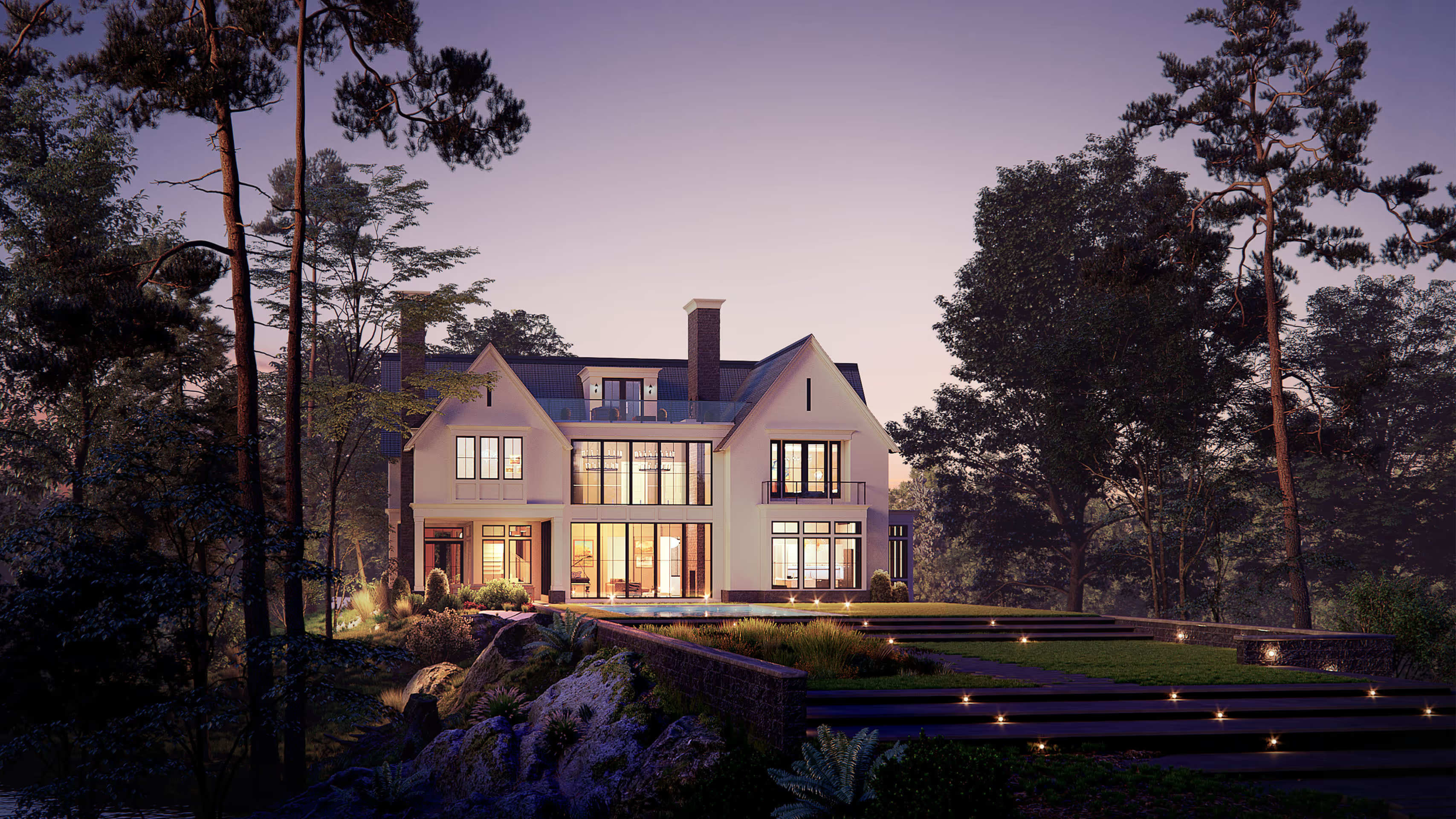
Designing a custom home in Connecticut is an exciting opportunity and a significant investment. The most successful homes are not only beautiful. They are thoughtfully shaped around the people who will inhabit them, the land they rest upon, and the life that will unfold within their walls.
If you are beginning to explore a custom home, contact us to start the conversation.
At Cardello Architects, our process begins with listening. As a full-service architectural design firm, we take the time to understand what inspires you, how your family lives, and what your property is asking of the design. From there, we guide the project through each phase with care, clarity, and close communication so the final home feels authentic to your vision and true to its setting.
For clients considering a custom home, understanding what to expect from that process can bring clarity from the beginning. Below is a closer look at how we work, what each phase involves, and how a thoughtful architectural process transforms an idea into a home of lasting value.
Pre Design: Understanding Your Vision, Your Property, and the Path Forward in Connecticut
Every project begins with discovery. Our earliest conversations are centered on how you want to live. We move beyond room counts and wish lists to talk about routines, family life, entertaining, privacy, light, circulation, and the overall feeling you want the home to carry. At the same time, we begin to study the site closely. Topography, orientation, access, landscape, views, and existing conditions all influence what the home can become.
In Connecticut, this phase also requires careful attention to local realities. Wetlands, coastal considerations, setbacks, zoning, lot coverage, drainage, and town planning requirements can all shape the direction of a project. Addressing these factors early helps confirm feasibility and creates a steadier path forward.
How We Begin the Conversation
Some clients come to us with a clear visual direction, while others are still defining what they want the home to be. Both starting points are welcome. Our role is to listen carefully, ask the right questions, and begin translating your priorities into a thoughtful architectural framework.
What Is Helpful to Share Early
A survey, site photographs, inspiration images, a preliminary budget range, timeline goals, and a list of needs and wishes can all be useful in these early discussions. Even simple references can help us understand the character, scale, and level of detail you are drawn to.
How We Study the Site
A custom home should respond to its land in a meaningful way. We pay close attention to how the home may sit on the site, where views can be captured, how light enters throughout the day, and how the surrounding landscape can be preserved and elevated through design.
Why Budget and Feasibility Matter Early
A strong process aligns ambition with realism from the beginning. By discussing budget and scope early, we can shape a project that moves forward with greater clarity and purpose.
Design: Translating Ideas Into Architecture
Once the groundwork has been established, the design phase begins. This is the point at which your vision starts to take architectural form. It is a collaborative process in which ideas are explored, tested, and refined until they begin to feel fully resolved.
As the design develops, we refine layout, circulation, scale, massing, orientation, and material direction. Every decision is considered in relation to the whole. The goal is to create a home that feels cohesive, personal, and deeply connected to the way you live. Strong residential design is not only about appearance. It is about shaping a home that functions beautifully in daily life.
Conceptual Sketches and Early Home Design Studies
Initial sketches and massing studies help establish the overall direction of the home. These early explorations allow us to study relationships between interior and exterior spaces, define the architectural character, and begin shaping the experience of the house.
The Collaborative Process of Refinement
Design improves through conversation, review, and revision. As we study options together, priorities become more defined and the home becomes more closely tailored to both your lifestyle and the property itself.
Visualizing the Home
Renderings and other visual tools can help communicate scale, proportion, and atmosphere. These materials allow the home to come into sharper focus before construction begins.
What You Can Expect to Decide During Residential Design
This phase is where many of the defining decisions begin to take shape. Clients are typically refining the layout, the architectural direction, the feeling of the home, and the spatial relationships that will guide the project forward.
Construction Documents: Defining the Home in Detail
Once the design has been approved, the next phase is to translate that vision into a complete and highly detailed set of construction documents. These documents provide the framework through which the home can be accurately priced, permitted, and built. Every element must be carefully considered and clearly communicated so the work can be carried out at a high level.
Thorough documentation is essential not only for construction quality, but for maintaining alignment between the original design intent and the final built result. For many clients, this is where the value of working with a professional and licensed architect becomes especially clear.
Why This Phase Is So Important
Construction documents serve as the technical roadmap for the project. They reduce ambiguity, support more accurate pricing, and give the builder a clear understanding of how the home should be executed.
What These Documents Include
Depending on the project, this phase may include floor plans, exterior elevations, interior elevations, cabinetry drawings, sections, schedules, finish specifications, and other detailed information needed to define the work fully.
Coordination With Consultants
A custom home often involves coordination with structural, civil, mechanical, lighting, and other consultants. Their work must be carefully integrated into the documentation so the home functions as beautifully as it looks.
Bidding and Negotiations: Positioning the Project for the Right Partnership
Once the documents are developed enough to support accurate pricing, the project moves into bidding and contractor selection.
At this stage, selecting the right builder is just as important as selecting the right design team. The relationship between owner, architect, and contractor will shape how the project moves forward, so clarity and trust are essential.
How We Help Identify the Right Builder
Some clients already have a builder in mind. Others look to us for guidance in identifying the right fit. In either case, we help create a process that allows for thoughtful comparison and informed selection.
Reviewing Bids Clearly
We help clients understand what each proposal includes, where differences exist, and whether the pricing reflects the same assumptions and scope.
When Adjustments Are Needed
If a project comes in above budget, that does not mean the design has failed. It means the team must make careful decisions about priorities, scope, and materials. Through adjustments, it is often possible to bring the project back into alignment while preserving the design’s core intent.
Why Partnership Matters
A successful build depends upon a strong working relationship between owner, architect, and contractor. When those roles are aligned, the project moves forward with greater confidence and consistency.
Construction Administration and Completion: Bringing the Vision to Fruition
As construction begins, our role shifts into ongoing observation, coordination, and advocacy. This is the phase where the design takes physical shape, and where continued architectural involvement becomes essential to protecting the integrity of the work.
We remain engaged throughout construction to help ensure that the home is being built in accordance with the documents and with the level of quality the project requires. We also help guide the client through the inevitable questions and field conditions that arise during the building process.
Observation and Ongoing Review
Regular site visits allow us to observe progress, review key conditions, and help ensure that the construction aligns with the design intent.
Resolving Conditions in the Field
Every construction project presents moments that require interpretation or adjustment. When those situations arise, we work with the builder and client to evaluate them thoughtfully and keep the project moving in the right direction.
Protecting Design Intent
A custom home depends on continuity from design through execution. Our continued involvement helps maintain that continuity so the final result reflects the vision that was established from the beginning.
Final Review and Move-In
As the project nears completion, the focus turns to final review, punch list coordination, and preparing the home for occupancy. This is the last step in ensuring that the finished result meets the expectations and standards established throughout the process.
Why the Right Process Matters
A custom home is not only a design project. It is a journey that asks for trust, clarity, and careful guidance from beginning to end.
Founded in 1999, Cardello Architects brings more than 25 years of experience to high-end, custom, residential design, with offices in Westport and Greenwich. Led by Robert Cardello, the firm has earned national and regional recognition, including Ocean Home’s Top 50 Coastal Architects, and guides clients through a tailored process from early vision through move-in. Contact us to begin the conversation about your custom home in Connecticut.
Frequently Asked Questions
What should I bring to the first meeting?
A survey if available, site photographs, inspiration images, a preliminary budget range, timeline goals, and a list of needs and priorities are all helpful.
Do I need a builder before I hire an architect?
Not necessarily. Many clients begin with the architect first and select the builder later, once the project is developed enough for accurate pricing.
What usually causes budget changes or delays?
Town approvals, site conditions, scope adjustments, consultant coordination, and market pricing can all influence budget and timing. A strong process helps identify many of these issues early, but custom homes still require flexibility.
What happens if bids come in over budget?
The next step is to review the bids carefully and determine where thoughtful adjustments can be made. In many cases, the project can be brought back into alignment without losing the larger design vision.