
To see some of our renovation work, take a look here for a gallery of our residential renovation projects.
Before you begin, focus on the decisions that will have the greatest effect on the project, such as
- Confirm the property's historic status first. Use Connecticut's official State Register of Historic Places page to access the state's GIS database for checking whether a property is listed on the State or National Register.
- Check whether local historic-district rules also apply. ConnCRIS can help you determine whether a property falls within a locally regulated historic district, which may require additional municipal approval for certain exterior changes.
- Understand the condition of the house before designing around it. Older homes may conceal water damage, deteriorated framing, or outdated systems. Early investigation can help establish a more realistic scope, budget, and schedule.
- Identify what gives the home its character. Prioritize the features that contribute most to the architecture.
- Decide what should be preserved and what can change. Focus preservation efforts on meaningful architectural features while allowing less significant areas to evolve around your needs.
- Plan modern upgrades early. Heating and cooling, plumbing, and electrical work can be more difficult to integrate into older construction. Coordinating these systems during design can prevent unnecessary disruption later.
- Make additions compatible with the existing architecture. Scale, massing, and rooflines deserve particular attention so new work feels like a natural extension of the residence.
- Review tax-credit eligibility before starting construction. Qualifying Connecticut properties may be eligible for the Historic Homes Rehabilitation Tax Credit, but the property's status and proposed work should be reviewed before work begins.
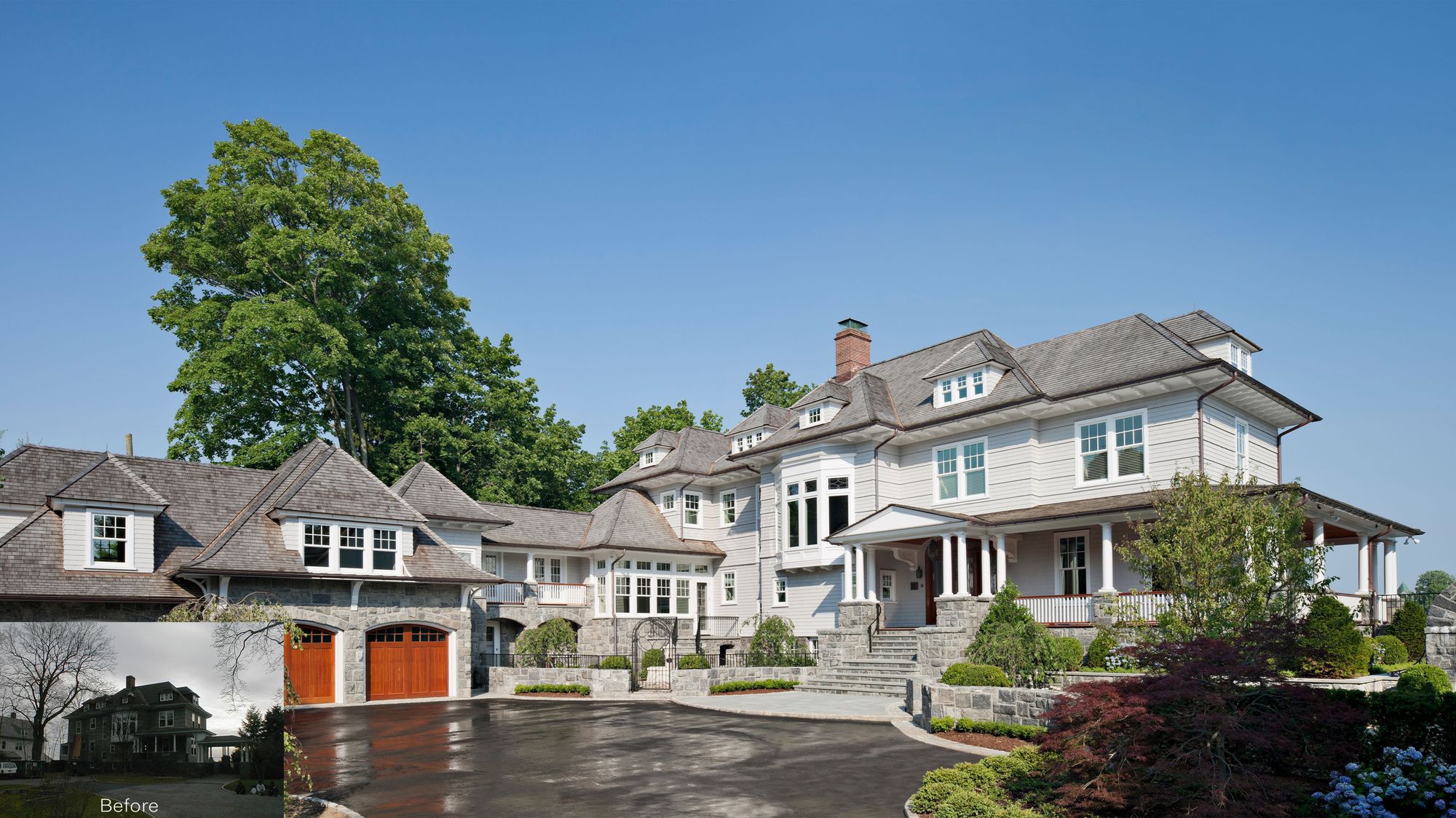
For a specific example of our renovation work, take a look at our Greenwich Historical project, as shown in the title image, which won an atHome A-List Award for its renovation.
1. First, Determine Whether Your Property Is Historic
Preservation Connecticut's homeowner resources can help you determine whether a property is formally recognized and understand the preservation resources available to Connecticut homeowners.
Your property may be individually listed on the state or national register of historic places. It may also be part of a designated district or fall within an area regulated by a local commission.
A State or National Register listing does not automatically require approval for every private renovation. Local designation may create review requirements for visible exterior changes.
Before design begins, confirm the property's status and review the rules in your municipality. This is especially important if you plan to change windows, exterior materials, or the shape of an addition.
2. Assess the House Before Making Major Design Decisions
Historic homes can conceal problems that are difficult to see during a standard walkthrough. Many Connecticut homes of this age may have water damage, deteriorated framing, or aging mechanical systems.
Previous alterations can create additional concerns. If the house has been changed several times, some earlier alterations may have affected the structure or introduced materials that are now failing.
This information helps establish priorities. Structural repairs may need attention before visible improvements, and identifying them early can reduce surprises during construction.
3. Identify What Gives the Residence Its Architectural Integrity
After we understand the condition of the home, we look at the features that give it its identity.
These may include:
- Overall massing and roof forms
- Window proportions
- Original stairs and millwork
- Masonry and fireplaces
- Ceiling heights
- Important room relationships
The goal is to understand which features contribute most to the property's architectural integrity.
An original entry hall may define the experience of the residence. However, a later addition may have less architectural value and offer more opportunity for change.
This distinction makes the process more focused. It helps preserve the features that matter most while allowing less significant areas to evolve.
4. Understand Restoration, Rehabilitation, and Renovation
These terms describe different levels of intervention in an older property.
Historic restoration generally seeks to return a property to the appearance of a particular period in its history.
Preservation focuses on maintaining significant materials and features.
Historic rehabilitation adapts a residence for contemporary use while retaining its defining character.
For many homeowners, that last approach is the most practical. It allows meaningful details to remain while improving comfort, circulation, and everyday function.
5. Adapt the Home for the Way You Live Today
Many older homes were planned around patterns of living that differ from what families expect today. Rooms may feel isolated from one another. Storage may be limited. Connections to terraces or gardens may also be weak. Renovations are meant to improve these conditions while keeping the character of the home intact.
We study how changes to the floor plan will affect proportion, circulation, and sightlines. Ultimately, the new design should feel current while still responding to the scale and character of the original home around it.
6. Plan Modern Building Systems Early
Heating and cooling, electrical service, and plumbing are some of the larger upgrades often needed in an older residence. So before you consider more aesthetic changes, it's important to understand if these modern updates are needed in your renovation.
In general, plaster walls, masonry, and important millwork can limit where new infrastructure can be placed.
This proper planning can reduce unnecessary disruption to those important features and avoid late changes during construction.
Design Additions to Complement the Original Residence
An addition may be the best way to create space that the existing residence cannot comfortably accommodate. It might provide a family room, primary suite, or stronger connection to outdoor living.
The success of the addition depends on how it relates to the existing architecture. The new work should always feel intentional and compatible. Done well, an addition can extend the useful life of the home while maintaining its character.
Review Connecticut Historic Home Rehabilitation Tax Credits Early
Finally, some owners of historic properties may qualify for Connecticut's state tax credit for eligible projects.
Eligibility depends on the property's status, the scope of the project, and the program's spending requirements.
If you believe your property may qualify, review the Connecticut Historic Homes Rehabilitation Tax Credit before construction begins. Please also keep in mind the proposed project must go through the required approval process, and some expenses may not qualify.
However, considering the credit early helps you coordinate its requirements with the broader project.